
Continuous Aluminum Gutters
Continuous gutters are formed to fit each roof run, which limits joints along straight sections. Aluminum is commonly chosen because it resists rust and is available in several profiles and finishes.
Serving Greensboro, North Carolina & surrounding areas
Calls answered around the clock
Call to speak with an independent gutter installer serving Greensboro about a new drainage system for your property.
CALL NOW: +1 915 232 9436
Gutter installation in Greensboro starts with the roofline, not a one-size-fits-all package. A contractor should measure each eave, identify where roof valleys discharge, note the fascia condition, and choose downspout locations that move water away from the foundation. Roof pitch, surface area, inside corners, and long uninterrupted runs all affect how the system should be laid out.
Greensboro receives rain throughout the year, and summer storms can put a large volume of water on a roof in a short period. Tree cover also matters. Homes near mature trees may need a design that allows practical cleaning and may benefit from discussing gutter guards, while open lots can have different debris and discharge concerns.
We connect callers with local gutter companies across Greensboro, NC that serve the caller's area. You speak with the contractor directly, receive the quote from that contractor, and decide whether the proposed materials and layout suit the home.
The contractor may recommend replacing damaged fascia before fastening new gutters. They should also examine drip-edge placement and determine whether the roof sends water behind the gutter. Those conditions need to be addressed in the installation plan rather than hidden by a new trough.
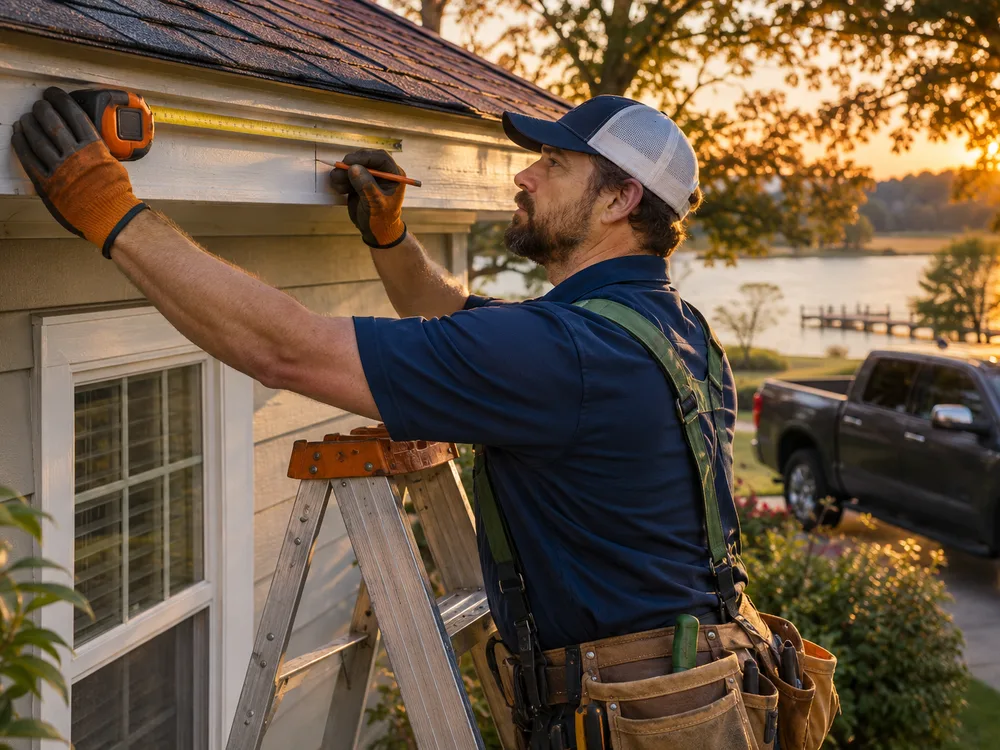
Continuous gutters are formed to fit each roof run, which limits joints along straight sections. Aluminum is commonly chosen because it resists rust and is available in several profiles and finishes.
K-style gutters have a flat back that mounts against the fascia and a decorative outer face. Half-round gutters have a curved trough and are often considered when the home's architecture calls for a distinct profile.
Downspouts must be placed where they can receive water from the gutter and discharge it safely. The contractor should account for walkways, planting beds, driveways, grading, and low areas near the foundation.
Hidden hangers support the gutter along the fascia. Outlets connect the trough to downspouts, while inside and outside miters manage corners. Correct fastening and sealed joints reduce movement and leakage.
Guards can limit the amount of leaves and larger debris entering the trough, but they do not remove every maintenance need. The roof type, surrounding trees, and access for cleaning should guide the choice.
When existing gutters are being replaced, the installer removes the old system and checks exposed mounting areas. Soft fascia, loose boards, failed fasteners, and staining can reveal conditions that need attention first.
Step 1 of 5
Call, enter your ZIP code, and you are connected directly with a local gutter contractor who serves that area. There is no form or email wait.
Step 2 of 5
The contractor evaluates eave lengths, roof valleys, fascia, drainage paths, existing gutters, and practical downspout locations. Access around the home and overhead obstructions may also affect the plan.
Step 3 of 5
The contractor discusses the proposed profile, material, color, downspout layout, and any guard option. The quote comes from the contractor, and you decide whether to proceed.
Step 4 of 5
If this is a replacement, the old gutters, downspouts, and fasteners are taken down. Exposed fascia is checked before the new system is attached.
Step 5 of 5
The installer establishes drainage fall, secures the hangers, connects outlets and downspouts, and seals joints. A water test can confirm flow toward the outlets and expose leaks at corners or end caps.
Skip the search through multiple contractor listings. One call connects you with a local gutter installer, and you discuss the roofline, materials, and quote directly with that contractor.
CALL NOW: +1 915 232 9436

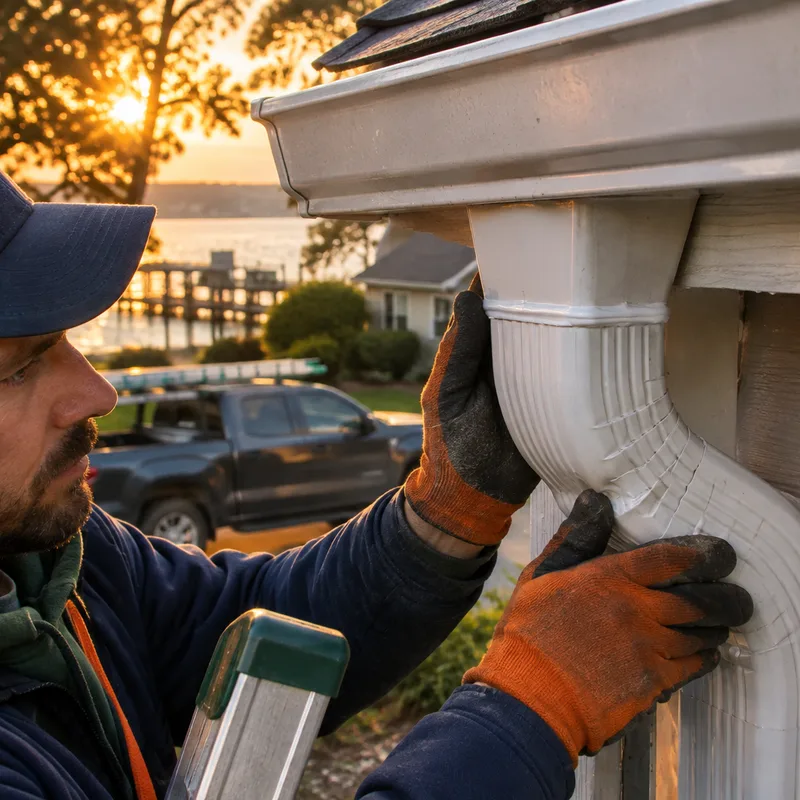
The contractor should base the recommendation on roof area, pitch, valley locations, eave lengths, and the number and placement of outlets. Large roof sections or concentrated valley discharge may require greater capacity or an adjusted downspout layout.
New gutters need sound mounting surfaces. If the fascia is soft, loose, split, or deteriorated, the contractor should explain what must be corrected before the hangers are installed.
Downspouts should release water where it can continue away from the foundation without creating a problem at a walkway, driveway, planting bed, or neighboring property. Greensboro's rolling terrain means the contractor should pay close attention to the actual direction of surface drainage on the lot.
Gutter guards may reduce the amount of leaves and larger debris entering the trough, but the right choice depends on the nearby tree canopy, roof material, gutter profile, and maintenance access. Ask the contractor how the proposed guard handles roof valleys and whether the system can still be opened or serviced.
Gutters are normally attached at the eaves without replacing the roof, but the installer must account for drip edge, roof overhang, and fascia condition. If water is running behind the existing gutter, the contractor should identify the cause before installing the replacement.
Ask whether removal, disposal, fascia-related work, gutter profile, material, hangers, outlets, downspouts, extensions, corners, and guards are included. You should also ask the contractor to explain payment terms and any warranty terms before deciding.
Water should move toward the outlets without spilling behind the gutter or remaining in low spots. Ask the installer to test the system and check end caps, corner joints, outlets, and downspout connections for leakage.
The phone line routes Greensboro callers to an independent installer serving their area. Discuss the roofline and proposed system directly before choosing your next step.
CALL NOW: +1 915 232 9436