
Existing System Assessment
The contractor checks why the old gutters failed, including loose fasteners, poor pitch, undersized outlets, failed seams, corrosion, and downspouts that discharge too close to the house.
Serving Greensboro, North Carolina & surrounding areas
Calls answered around the clock
Use the phone line to reach an independent local contractor who replaces failing gutter systems in your part of Greensboro.
CALL NOW: +1 915 232 9436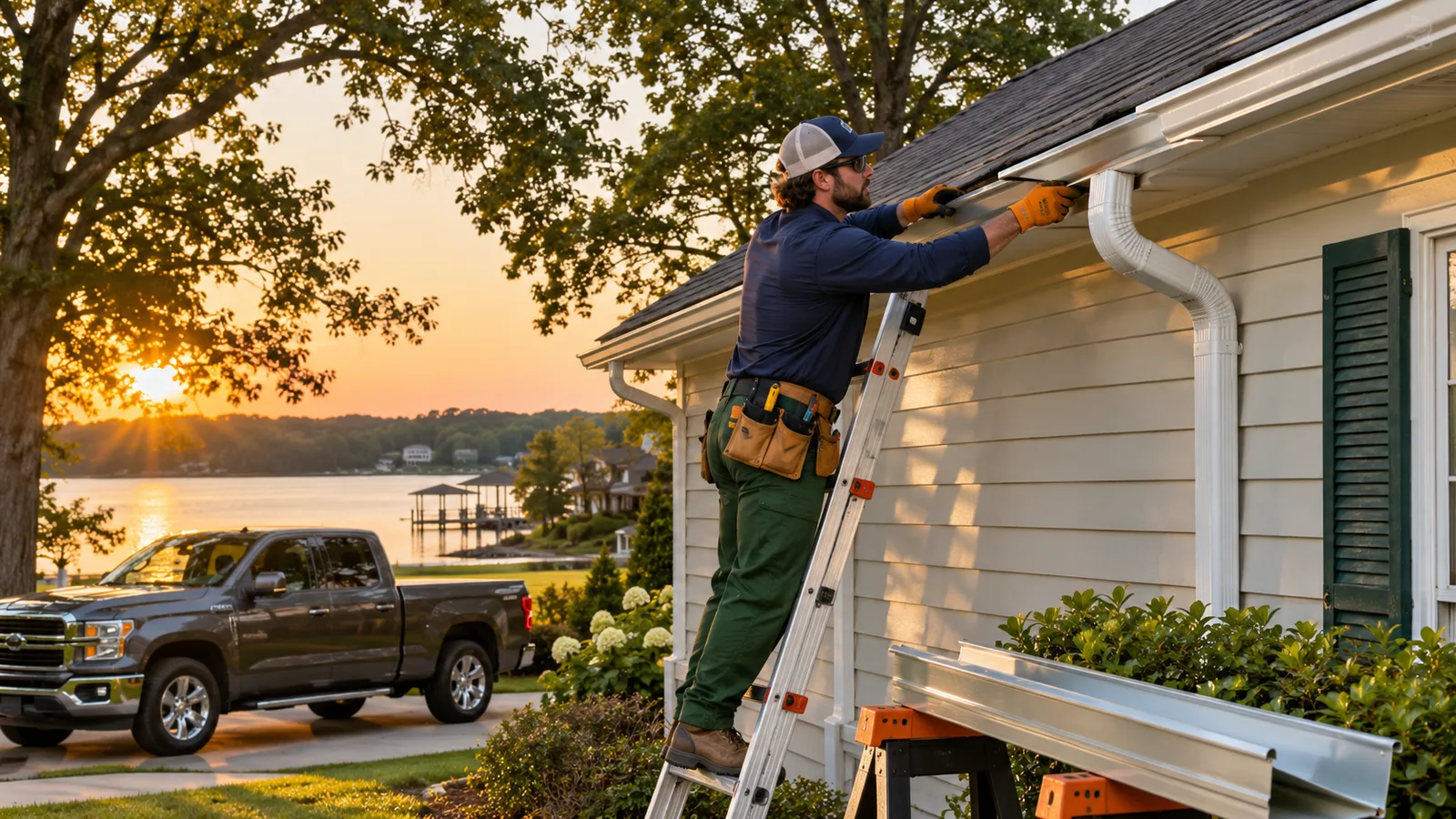
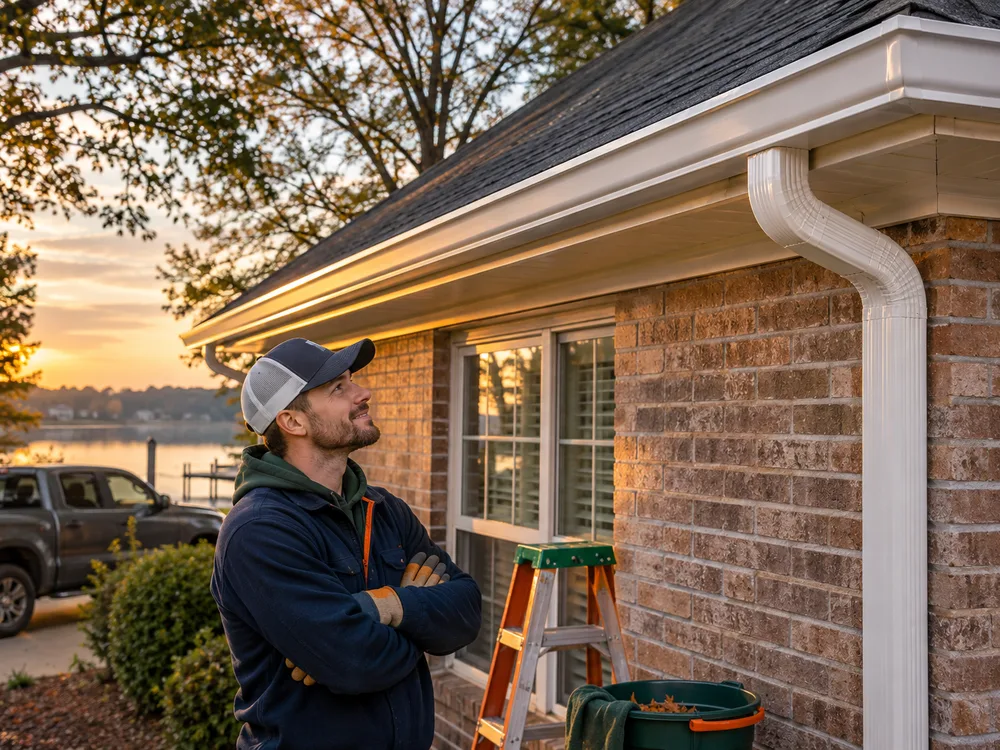
Gutter replacement in Greensboro, NC is appropriate when the existing system has widespread corrosion, split seams, recurring leaks, sagging runs, or a layout that repeatedly sends water where it should not go. A sound system collects runoff along the roof edge, directs it through properly placed outlets, and discharges it away from siding, entryways, and the foundation.
A contractor should inspect more than the visible troughs. The first check usually covers the fascia and rafter-tail attachment points, roof-edge condition, gutter pitch, outlet locations, downspout routes, and the ground where each downspout empties. Soft or deteriorated fascia may need attention before new hangers can hold securely. Roof valleys and long runs also deserve close review because they concentrate runoff.
Greensboro receives rain throughout the year, and summer thunderstorms can put a large volume of water on a roof in a short period. Mature trees common across established neighborhoods can add leaves, twigs, and seed pods to the system. Those conditions make outlet placement, downspout capacity, and access for future cleaning practical parts of the replacement plan.
We connect callers with gutter companies around Greensboro, NC that handle replacement work. You speak with the contractor directly, receive the quote from the contractor, and decide whether to proceed.
The contractor checks why the old gutters failed, including loose fasteners, poor pitch, undersized outlets, failed seams, corrosion, and downspouts that discharge too close to the house.
Common choices include aluminum, steel, copper, and vinyl. Aluminum is widely used because it resists rust and can be formed into continuous runs. K-style and half-round are common profile options.
Gutters need controlled slope toward each outlet. Roof area, valleys, run length, and discharge routes help the contractor determine gutter size and the number and placement of downspouts.
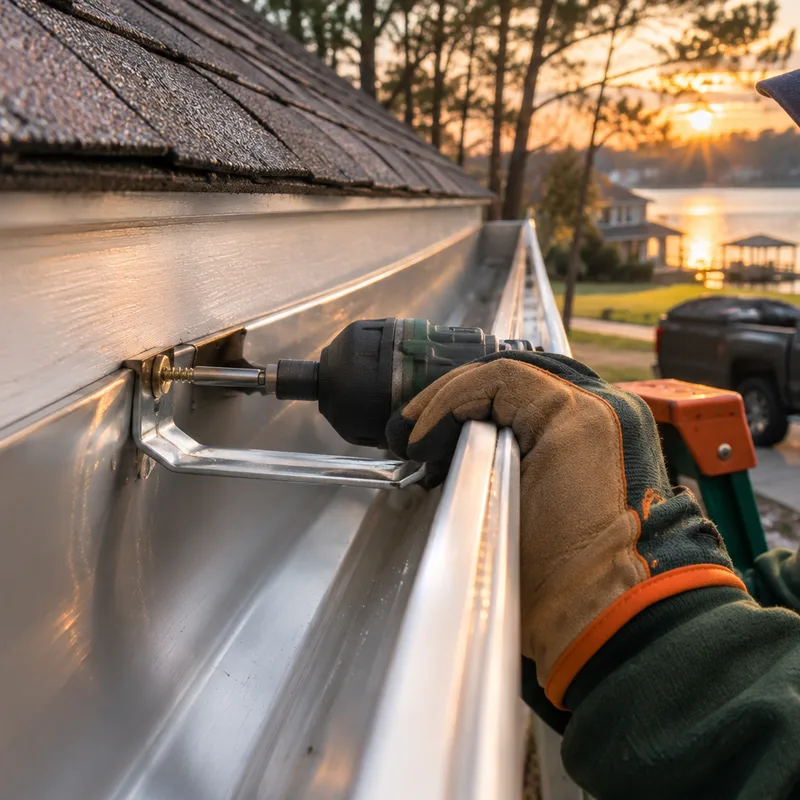
Hidden hangers fasten the gutter to sound fascia at regular intervals. The contractor should address weak attachment areas rather than fastening a new system over damaged wood.
Elbows and extensions should carry water to a suitable discharge point without creating a trip hazard, washing out a planting bed, or sending runoff toward the foundation.
Drip edge, shingles, fascia, and gutter position must work together so runoff enters the trough instead of slipping behind it. A contractor should identify any roof-edge defect that affects the installation.
Step 1 of 5
You are connected directly with a local gutter contractor who serves that area. There is no form or email wait.
Step 2 of 5
The contractor can arrange the next step and assess the roofline, existing gutters, fascia condition, drainage paths, and access around the house.
Step 3 of 5
The contractor should explain the recommended material, profile, size, hanger method, outlet locations, downspout routes, removal work, and any related fascia concerns.
Step 4 of 5
The contractor provides the quote and terms. You can ask questions, review the scope, and make the decision directly.
Step 5 of 5
During installation, the old system is taken down, attachment surfaces are checked, new runs are formed or fitted, and downspouts are installed. The finished system should be checked for pitch, secure fastening, and controlled discharge.
Avoid contacting replacement companies one at a time. The phone line puts you in touch with an independent gutter contractor serving the Greensboro area.
CALL NOW: +1 915 232 9436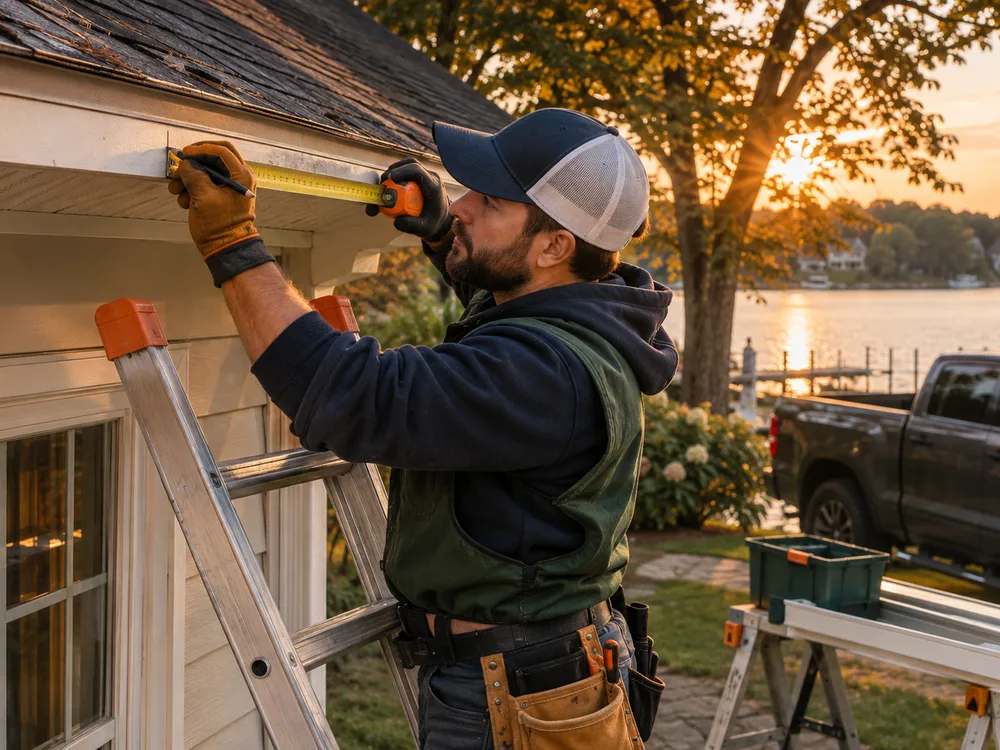
A single run may be enough when damage is isolated and the remaining system drains correctly. Full replacement may make more sense when corrosion, failed joints, sagging, poor pitch, or undersized components affect several sides of the house. The contractor should inspect the entire drainage path before recommending the scope.
Continuous gutters are a practical choice because each roof run is formed with few joints, reducing common leak points. Corners, end caps, and outlets still require sealed connections. The contractor can recommend a profile and size based on the roof layout and concentrated flow from valleys.
Aluminum, steel, copper, and vinyl differ in weight, corrosion behavior, appearance, and installation method. Aluminum is commonly formed into continuous runs, while copper is often chosen for its distinct appearance and long-term patina. Ask the contractor how the proposed material suits the roof edge and exterior finishes.
New gutters need sound attachment points, so deteriorated fascia should be addressed before or during installation. Fastening into soft wood can allow hangers to loosen and the gutter to pull out of alignment. Ask whether fascia work is included in the written scope or handled separately.
Gutter guards are optional and should be selected according to the debris around the home and the roof design. Fine screens, perforated covers, and other guard styles handle leaves and smaller debris differently. Even a covered system needs accessible outlets and periodic inspection.
The proposal should identify the gutter material, profile, size, color, hanger method, downspout count, discharge plan, removal scope, and treatment of any damaged fascia. It is also sensible to ask about cleanup, change approvals, payment terms, and any manufacturer or contractor warranty terms.
Call Greensboro Gutter Cleaners and get connected with a local gutter contractor who serves the Greensboro area. You talk with the contractor directly, review the proposed work, and decide what happens next.
CALL NOW: +1 915 232 9436