
Leaks at Seams and Corners
Water can escape at end caps, miters, outlets and joints between sections. The contractor checks whether the joint needs cleaning and resealing or whether a distorted or corroded component should be replaced.
Serving Greensboro, North Carolina & surrounding areas
Calls answered around the clock
Reach an independent Greensboro-area gutter repair contractor by phone to discuss leaks, detached runs, sagging, or poor drainage.
CALL NOW: +1 915 232 9436
Gutter repair Greensboro NC homeowners search for often starts with a visible leak, a section pulling away from the fascia or water spilling over an edge. These faults can send runoff onto siding, collect water near the foundation and wash mulch or soil out of planting beds. A repair contractor can trace the drainage problem, determine which components have failed and explain whether a focused repair or broader replacement makes sense.
Greensboro's humid climate, thunderstorms, falling limbs and seasonal leaf debris can be hard on roof drainage systems. Tree cover around established neighborhoods such as Irving Park can add leaves and twigs that obstruct outlets. Near Lake Jeanette, open exposure around some properties can make secure fastening and correct gutter pitch especially important during heavy rain. Older homes in Fisher Park may also have roof edges, fascia details or gutter profiles that call for careful repair planning rather than a standard parts swap.
Instead of contacting several Greensboro gutter companies and waiting for separate replies, one call connects you directly with a local contractor who handles gutter repair. You speak with the contractor, receive the quote from the contractor and decide whether to proceed. Greensboro Gutter Cleaners provides the direct route to that conversation; the independent contractor assesses and performs the work.
Water can escape at end caps, miters, outlets and joints between sections. The contractor checks whether the joint needs cleaning and resealing or whether a distorted or corroded component should be replaced.
Hangers can loosen, pull away or become spaced too far apart for the load. A contractor checks the fascia behind the gutter before installing new fasteners because damaged wood will not hold reliably.
Gutters need a consistent slope toward their outlets. Low spots hold water, add weight and leave sediment behind. Re-pitching may involve resetting hangers across part or all of a run.
A sound gutter still overflows if an outlet is restricted or a downspout connection has separated. The contractor follows the water path through elbows and discharge points before recommending repair.
Soft fascia, loose drip edge or runoff passing behind the gutter can make an apparent gutter leak more complicated. The cause should be identified before new sealant or fasteners are applied.
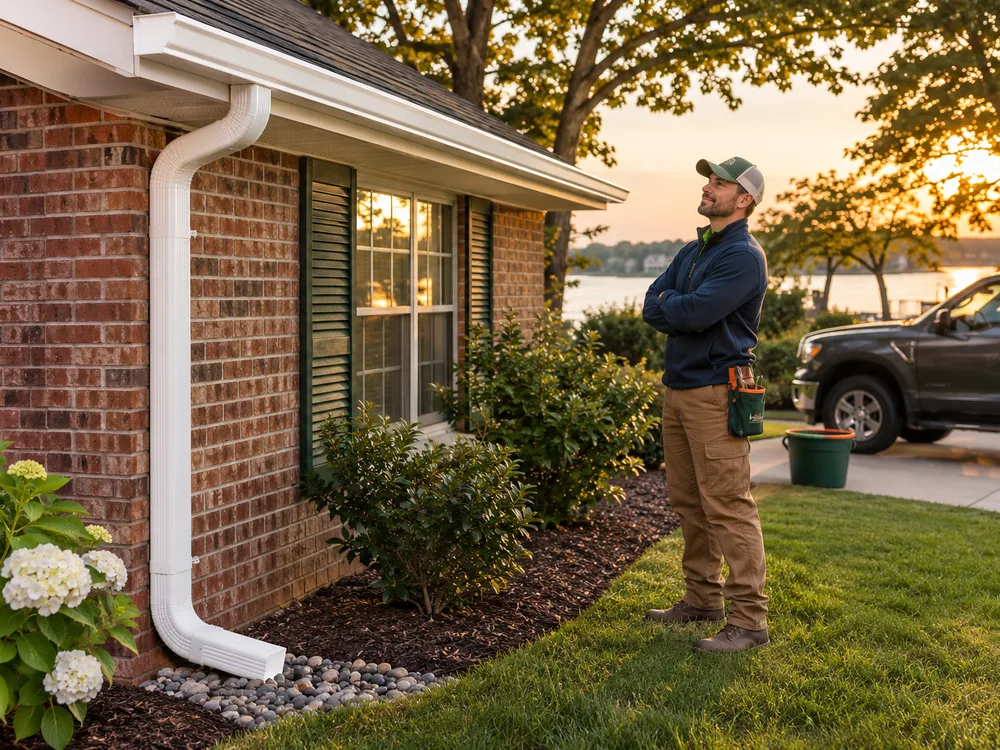
The discharge point matters. A contractor can identify disconnected extensions, crushed lower sections and outlets that release water where it can erode a bed or collect beside the house.
Step 1 of 5
Enter your ZIP code and you are connected directly with a local gutter contractor who serves that area. There is no form or email wait.
Step 2 of 5
You talk with the contractor about visible symptoms, access around the house and when the problem occurs. The contractor can then explain the next practical step.
Step 3 of 5
The contractor examines the affected run, hangers, seams, outlets, downspouts and nearby fascia. Water testing may help reveal a slow leak or confirm whether the pitch carries runoff correctly.
Step 4 of 5
The contractor explains the scope and provides the quote. Ask which parts will be reset, sealed or replaced, whether fascia work is involved and what warranty terms apply.
Step 5 of 5
The decision remains yours. If you approve the work, the contractor schedules and performs the repair under the terms you discussed directly.
Gutter leaks tend to worsen rather than disappear. Call to reach a nearby repair professional who can identify the failure and outline practical remedies.
CALL NOW: +1 915 232 9436
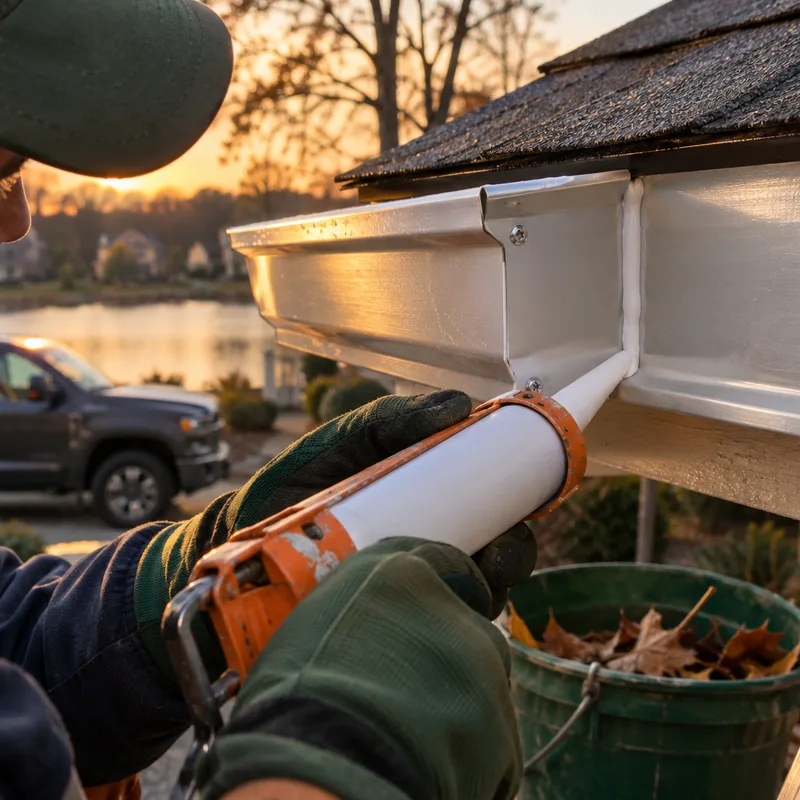
A clean, structurally sound joint can often be resealed, while cracked, badly corroded or distorted material may need replacement. The contractor should remove failed sealant and inspect the joint itself because applying another layer over dirt or loose material rarely addresses the underlying fault.
Water behind a gutter may indicate loose fastening, incorrect placement under the drip edge, damaged fascia or a roof-edge detail that directs runoff behind the trough. A contractor should examine the roof edge and fascia before treating the symptom as a simple seam leak.
Sagging commonly develops when hangers loosen, fascia deteriorates or debris and standing water add weight to the run. Falling branches and ladders leaned against the gutter can also bend the metal or disturb its fasteners.
Overflow does not always mean the gutter itself is damaged. A blocked outlet, obstructed downspout, inadequate pitch or debris buildup can produce the same symptom, so the full path from the roof edge to the discharge point should be checked.
Localized repair is possible when the remaining system is sound and compatible parts are available. A contractor may replace an end cap, outlet, elbow, short section or group of hangers, but widespread corrosion, repeated joint failure or extensive fascia damage can change the recommendation.
Ask what caused the failure, which components will be repaired or replaced and whether the proposed work corrects the water path as well as the visible damage. Also ask how surrounding fascia will be handled, whether materials will match the existing profile and color, and what warranty terms the contractor offers.
Call Greensboro Gutter Cleaners and get connected with a local gutter contractor who serves your area. You talk with the contractor directly, review the proposed work and choose what happens next.
CALL NOW: +1 915 232 9436